
Off The Press
Off The Press - wayzgoose's Online Journal
Welcome to Off The Press, the official blog of wayzgoose, home of British-made planners. Our range is beautifully crafted in our Yorkshire workshop. Explore expert tips, inspiring guides, and exclusive behind-the-scenes stories that celebrate our dedication to thoughtful organisation and reflection.

8 Tips To Plan The Best Fishing Trip
Spring has finally sprung, so dust off those waders, and let's get planning your next fishing trip! Whether you're searching for the best fishing spots or aiming to catch the biggest fish of your life, proper planning is key. As the old saying goes, "failing to prepare, you are preparing to fail". So let's run through our 8 top tips on how to plan the best fishing trip! 1. Research Fishing Locations First things first, you need to combine digital scouting and local networking to find ideal fishing locations. Before leaving home, stalk your potential fishing destinations online. Start your fishing research by using Google Earth and Google Maps to soar above coastlines and rivers, scan for jetties, break walls and river mouths. Dive deeper with the satellite views to spot any treasure-filled underwater features like sandbars, drop-offs, and weed beds. Tap into local fishing knowledge, whether it be your new pal at the tackle shop or joining a niche Facebook group, the boots on the ground are the ones in the know. Staff at your tackle shop are often updated on the latest 'intel' and know which local fishing hotspots are performing, and which fish species are biting this week. Bonus tip: don't go in all guns blazing asking locals for their 'secret spots', respectfully ask about general patterns or what they have seen out and about lately. The research doesn't stop once you are bankside; you need to get in the zone and focus on water observations too. Make sure you are using fishing weather tools that aggregate tide charts, wind direction, water temperature and any other factors that directly impact fish feeding and the probability of them nibbling at your line. 2. Consider The Conditions So you have the location pinned, now let's get into the real elements that determine if you will be 'bagging up' or not, the weather and the water. These two dictate fish behaviour more than almost any factor, so it is best to have them on your side. Fish are super sensitive to atmospheric pressure, as this changes their swim bladder. The barometric pressure dropping (usually before a storm) often triggers a feeding frenzy, the perfect time to be casting out. However, on the flip side, high pressure (post storm) can make fish lethargic and swim deeper for cover. To catch the fish at their predictable daily routine, the sweet spot is 72+ hours of stable pressure. When selecting from your fishing tackle box, consider the water clarity. In murky waters, go bold and loud with colours like chartreuse or use lures that vibrate. In clear water, stick to thin lines and natural, stealthy colours, to increase your landing chances. Keep the old adage in mind, 'Wind from the west, fish bite best', when debating what side of the bank to set up on. Predatory fish like Bass and Pike love to wait on wind-blown banks, ready to ambush prey. As the wind pushes surface water, plankton and baitfish towards the shore. Also in the UK, southerly or westerly winds are preferred for fishing due to the milder air, as the bitter easterly wind can send the fish deeper, seeking shelter. 3. Sort Out The Legal Bits Don’t let your dream fishing trip end in a fine; make sure you’ve dotted the i’s and crossed the t’s when it comes to permits, regulations, and local fishing laws. Most riverbanks are privately owned; you will need to reach out to your local fishing clubs to have access granted. However, you can purchase the Waterway Wanderers permit, which will give you access to over 300 miles of canals and rivers. Do keep in mind that if you are over 13, you will need a rod license alongside any other fishing permits. Also, please be mindful of catch limits; they vary depending on location and species. Always stay updated with local regulations to ensure you’re fishing responsibly. Planning ahead not only protects your trip but also helps preserve the waters for future generations of anglers. So, take the time to get your permits, follow the rules, and make the most of your adventure! 4. Plan Your Equipment & Pack Smart Packing, the worst part of the fishing trip prep! Missing one essential piece of kit can ruin the entire day. Why not create a tick list system for the night before? Ensuring you never forget your rod, reel, extra line, tackle box, pliers and multitool, the backbones of your equipment. If there is one thing we hate to be without, it is our fishing multitool! It replaces half a dozen standalone items, which means fewer items to forget on the kitchen bench. We love combining items, like tackle backpacks with key features like built-in rod holders and rain covers. A new essential in our fishing gear has to be a fishing dry bag. These rolltop lifesavers come in various sizes and keep all your fishing licenses and electronics 100% dry, even in those unexpected torrential downpours. On the other side of the coin, make sure you pack sun cream for those glorious sunny days. 5. Outline Your Fishing Strategy Don't cast blindly and cross your fingers. Build out a solid fishing strategy based on your past experiences. Refer back to your fishing log book to track patterns and trends. While you are sitting bankside, look at your entries from the same time last year. What variables have changed? Was the water visibility lower? What was the water temperature? Was it overcast? All these little elements you log create a bigger story. Define your target species, and don't try to catch everything at once. Tailor your location and narrow down your fishing gear to focus on one or two key species. This should improve your catch rate. Another tip is to try the Plan A and Plan B method. Start with your most confident lure (plan A), and if you have no hits within 30 minutes, switch it up to a completely different fishing style. For example, move from a topwater lure to a bottom-bouncing jig if your initial plan isn't working. Having a game plan filled with solid strategy moves is the way to go. 6. Choose Your Company (Or Go Solo) Your whole fishing trip's vibe changes when you add company to the bankside. Both solo and group trips can be tailored to fit your specific fishing goals. A solo fishing trip is best for honing in on your skills and truly focusing on the task at hand. You can move at a whim and stealthily when alone. Plus, you do not need to worry about other shadows and any crossed lines! It is a great advantage to have, especially when targeting easily spooked fish like trout at a small stream. Plus if you are not having any nibbles, you can amble down the bank without requiring a group consensus! Whereas a group fishing trip is great for social bonding, especially if you are a beginner, you can learn 'in real time' with your company. If you are the fishing master taking a beginner under your wing, we recommend your trip involves a high-action spot, like a well-stocked pond, to keep them engaged throughout the day. When group fishing, we love to divide and conquer, solving the collaborative puzzle together. Everyone can try a different method, such as lures, depths or baits. Together (hopefully) finding the solution with the magic combinations. 7. Have Fun As they say, it is called fishing, not catching, so make sure you manage your fishing expectations of each trip. After all, every day spent without a bite is still a day in the great outdoors. Remember to take regular fishing breaks, enjoy the scenery, enjoy a good lunch, you don't need to cast the full eight hours bankside. Fishing is about the experience, whether that is alone or with friends and family, not just the count at the end of the day.Celebrate the small wins throughout the day. Like successfully mastering a new knot, nailing a difficult cast under an overhanging tree, or it could be just watching the sun shimmer on the water. Some days conditions will not align, but don't let a blank ruin your day. Treat it as a data-gathering mission for your fishing log book. If things are super slow, use this time to experiment with that weird lure at the bottom of your bait bag; you may never know your luck! 8. Track Your Fishing Trips Now this is how you turn your hobby into a skill, tracking every little detail. Using our fishing log book to record elements from the moon phase to the baits and lures used, right through to the species and weight caught, you will soon have a personal tale of your fishing adventures.Over time, your log book will become a personalised cheat sheet for your local body of water, pinpointing exactly what conditions to match for a successful day bankside. Maintaining your fishing log book transforms random luck into a predictable strategy. Soon, you will be able to filter through your logged fishing trips to see which spots perform best on a north or south wind. Or even go as detailed as to see which specific fish species start hitting topwater baits based on the water temperature rather than the calendar date. Each fishing trip is a new fishing adventure, and your log book captures it all. Final Thoughts Now that you're equipped with these 8 essential fishing tips, it's time to start planning your next adventure! Whether you're scoping out the best fishing spots, packing the right gear, or selecting your ideal fishing companions, every step you take sets the stage for a memorable trip.Turn your trip experiences into a winning formula by tracking your fishing trips with a fishing log book is the key to improving your skills and strategy over time.
Learn more
How To Start Fishing: Everything You Need To Know
Want to learn the ropes (or lines) of fishing, but don't know where to start? It is totally normal for beginners to feel overwhelmed by the amount of gear, baits and techniques. Today, we are going to strip it back and focus on the absolute basics of how to start fishing in the UK. How To Start Fishing: The Absolute Basics Fishing - the most popular 'sport' in Britain, the appeal of shutting off the outside world and focusing on the here and now is a big pull to reel us all in. This timeless hobby can be relaxing and frustrating all rolled into one. We want to help you filter out the noise and focus on your goal, landing as many fish as possible. To get started, you need to focus on the three main steps: · Get legal· Have the right kit· Find a 'sure-fire' spotThe aim is to start simple and fish often, to develop your skillset. Essential Gear For Beginners Getting LegalFirst things first: here in the UK, gone are the days when you could simply turn up and fish. If you are caught without a rod licence, your tranquil day could result in a hefty fine of up to £2,500. Don't worry, though, buying one from the government online is super simple. If you are lucky enough to be under 13, you do not need to carry a licence. Those aged 13–16 will need a free junior yearly licence. If you are unsure whether fishing is for you, you can opt for a daily licence instead of a yearly one. If you are 66 or over, you can applyfor a discounted yearly licence. You will also need permission to fish the body of water. If you are fishing commercially (we highly recommend this for your first attempt), you will need to purchase a day ticket or a club permit for the specific water you are on. Having The Right KitA wealth of information is right at your fingertips once you open the door to your local tackle shop. They can guide you on how to start fishing with the basic gear setup. If you are lucky, they may have a 'coarse' fishing or 'float' fishing starter kit on offer. To get started, you'll need a 10ft rod and (to save you some effort) a reel already loaded with 6lb line. This line is strong enough to land Roach, Rudd, Perch, and young Bream, and it might even handle Carp, Tench, or Chub. To streamline your set-up, grab a 'ready rig'. With the hooks already tied to a line and a float attached, all you need to do is simply loop it onto your main line, and you will soon be reeling them in. For responsible fishing, you will need a landing net and a disgorger to ensure the fish are returned to the water safely. The landing net is essential for lifting the fish out of the water without putting any undue stress on the line or the fish's body. The disgorger, a plastic or metal tool, helps safely remove hooks from deep inside a fish's mouth. Finally, you will need some bait. Live worms and maggots are a simple starting point, or sweetcorn and bread are highly effective for UK freshwater fish. Top Tips For Starting Fishing Now that you have secured your gear and have become acquainted with your local tackle shop staff, it is time to plan your first trip. So it is time to load up your tackle bag and head to your chosen body of water. Start Small And Simple Don't set your sights on reeling in a fish, that will have you shouting, "We are going to need a bigger boat!" Target fish like Perch or Roach, save the monsters for later. These two live in almost every pond/canal in the UK. They are aggressive and aren't picky about bait. Set up just one rig. While your confidence is growing, stick to a simple float (waggler) setup. A float is great to help fine-tune your technique, as it teaches you how fish behave underwater. Plus, it is visual and exciting too! Don't overwhelm yourself; stick to the rule of one: one rod, one bag of bait, one hook. With too much gear, you will spend more time untangling than fishing. Learn From Mistakes Treat each mistake as a lesson learned, like a missed strike. If your float goes under and you miss the fish, you have either struck too early or too late. Next time, wait for the float to stay under, then count '1-2' before lifting the rod. Always pull on your knot before casting. If it snaps in your hand, it is a lesson; if it snaps with a fish on it - well, that's heartbreaking. Snags. If you get your line stuck on a branch or in weeds, do not pull hard! Flick the line or change your angle instead. Brute force will not only snap your line, but it will also leave litter behind. Track Conditions Like everything in life, the more data you acquire, the higher your success rate. Using a fishing log book to track elements of your trip will help you summarise the winning components. Watch which way the wind blows. You will find that fish often follow the wind, because it pushes surface food and warmer water towards one bank. If the wind is blowing directly at you, the fish are most likely to be right at your feet. Another key weather factor to take into account is light. Fish feel extremely exposed in bright sunshine and prefer overcast days. Keep in mind that during the golden hours (dawn and dusk), fish feel safe enough to feed aggressively. Remember to log the water's temperature. Cold water slows down fish. In winter, try using tiny baits and fish deeper to get a nibble. In summer, fish are more active and swim closer to the surface in warmer water. Understand Fish And Environments Fish don't just sit in the middle of a lake waiting for you to cast your line. 'Cast' your eyes to find features. Fish love to hide near overhanging trees, lily pads or in reedbeds. These places give the fish everything they need: safety, food and comfort. Be stealthy. Don't stomp on the bank (or boat) or cast giant shadows over the water. Fish can sense vibrations, so don't try to spook them just before your bait hits the water. Trick the fish with a 'freebie throw'. Throw a few maggots or some corn every five minutes over your chosen patch. This will create a feeding zone and keep the fish right in front of you. Common Beginner Mistakes (And How To Avoid Them) It is easy to get frustrated when the fish aren't nibbling. Don't let a slow day dishearten you. These three mistakes are what separate the 'lucky' anglers from the skilled ones. Not Learning From Failed Trips A day without a catch is called blanking. While most beginners will pack up and think of an excuse to stay home next time, don't be defeated by this. Treat every blank as a data point. Ask yourself: Was the water too cold? Was the bait too big? Did the wind change direction? Was I fishing near features? Step it up a level. Instead of relying on your memory for these changes, log them in your fishing journal. Record everything, from the moon phase to the water's visibility. After 5-10 trips, you will soon see patterns in your chosen body of water and how the weather can affect your catch rate. Giving Up Too Early Many beginner anglers fish for 20 minutes, don't get a bite, and assume there are no fish in there. Why else would there be no bites on your tinned sweetcorn? Next time this happens, fish the water column. If you aren't getting any nibbles on the bottom, shallow up your float. No bites in the sun? Shimmy across to the shade. Most anglers would recommend giving a spot at least 45 minutes. If you have varied your bait selection and depths and still have no activity on the end of your rod, it's time to move 20 yards down the bank. Being active in your search will beat static waiting every time. Changing Gear Too Often Beginners think a more expensive rod, a new lure or some magic bait is the solution to filling up the boat. But all it will do is prevent you from truly mastering the basics. Stick with one method first (like float fishing) and focus on becoming a master. Learn to control the drift, understand how to read the bites and how to 'shot' the float correctly. If you aren't catching, it is rarely the rod's fault; it is usually the presentation. Instead of changing gear, opt for minor adjustments to your tackle. Try a smaller hook or a thinner line. These small changes will make your bait look more natural, which is far more effective than buying a fancy new reel. Why Keeping A Fishing Log Book Makes You A Better Angler If you want to transform your fishing trips from a game of luck into a game of strategy, keeping a log book is the answer to all your prayers. If you want to 'level up', this is the single fastest way, as the data you will acquire will be personalisable to you and your catches. Here is how your fishing log book can turn you into a pro angler. It reveals hidden patterns.Fish are creatures of habit. They predictably react to specific triggers. Your log book will help you spot elements at a glance like:· The magic temperature. You will notice once spring hits and the slow-flowing river turns to a warmer 12°C, the Roach will start feeding more aggressively in preparation for spawning.· Wind direction. You will soon find that when you are at your favourite lake, you will only start to land when the wind is blowing south-westerly.· Time of day. You will soon stop wasting your time by the bankside at midday, when your logs show that 80% of your catches happen during the golden hours between 6-8 am. It eliminates 'blank' anxiety.Keep rational thoughts at the forefront of your mind when you are having a bad day (a blank). Refer back to your fishing logbook to compare what the weather was like on a similar date the year before. For example, if it is currently 5°C cooler than last year, this cold snap will affect your catches.It will help build your confidence when it reminds you of how many you caught in the past. Even when this current season is tough. It refines your tactics.Take the guesswork out of fishing by recording your gear and bait in detail. By using your catch log, you can record which species loved the sweetcorn. Or you may notice in your trip notes that you lost three fish on a size 12 hook, but landed everyone on a size 16. Every bit of data creates a success map for your future trips. What to record. Our fishing log book helps guide you to keep your recordings simple. With prompts to log the basics like your location and the date, or to dive deeper by noting details such as the moon phase, it makes tracking your trips easy. You don't need to write a novel to see the patterns emerge over time. We love using the trip notes section to record the main lesson or observation of the day, like 'fish were hugging the reeds today'. We also love the nostalgia of reading through our Top 20 Trips section. Final Thoughts Starting fishing does not have to be complicated. Focus on the basics: get a licence, keep your gear simple, and choose an easy spot (like a well-stocked fishery). From there, the real progress will come from time spent on the bank. Every trip will teach you something new about fish behaviour, weather conditions, and your own technique. Remember, even the most experienced anglers still have blank days. The difference is that they learn from them. By paying attention to what works (and what doesn't), you will slowly build your knowledge and confidence. Soon, you will go from occasional catches to consistent ones. Remember, keeping a fishing log can make a huge difference. Recording the small details from each trip helps reveal the patterns that other anglers miss. So grab your rod, pick a spot, and start casting. And if you want an easy way to track your progress along the way, a fishing log book can become one of the most valuable tools in your tackle bag.Tight Lines from the wayzgoose Team
Learn more
Top Tips To Improve Your Fishing
We wish becoming a master angler were instant, but sadly, it takes time. Even the most experienced anglers are constantly refining their approach. Tinkering with small improvements, from altering your casting technique, working on your awareness, or starting to keep records, all of these small elements add up. The fastest way to improve? Learn from your experience. (Not that we need any persuasion to spend more time bankside!) In this guide, we will cover practical fishing tips to help you on your future trips. The Top 8 Tips For Improving Your Fishing Tracking your progress is the main element that separates the casual anglers from the successful ones. Like anything in life, when you take the time to reflect, you can see how far you have come and look to improving in the future. The best anglers are always working on ways to improve, from their technique to their mindset. The main elements we think will improve your landing rate are:· Researching and understanding your fishing environment· Mastering your casting techniques· Adapting to weather and water conditions· Stealth positioning· Keeping your hooks sharp· Using a fishing log book· Learning from your peers · Practising patience and consistency. So whether you are fly fishing, lure fishing, coarse fishing, or sea fishing, check out the fishing tips below. Research & Understand Your Environment One of the simplest fishing tips that makes a difference is to research your planned trip location (not just its distance to the local pub!) Research the species in the body of water and read up on local fishing reports. As we all know, different fish species behave differently. So if you usually go for Carp at your local lake, but your next trip is to the river, and you have Barbel and Chub on your list, read up on their traits. Remember that fish location changes with the season and the time of day. Also, aim to be at your swim early, with fish being the most active at sunrise and before sunset. It is common to see them rolling or jumping as the sun rises. Allow yourself to be submerged in your environment. Step back and watch for any ripples or surface disturbances. Note birds diving at bait fish. Look for stark shade lines on those rare sunny days. All of these little moments will help improve your fishing. Taking time to understand fish behaviour removes the guesswork and will dramatically improve your fishing rate. Go one step further and record the water temperature, note the location and depth, and even the structure type. Logging little details will help you paint a picture of the successes in each environment. Master Casting Techniques Casting further generally means you will catch more fish. However, accuracy matters more than distance. A well-executed cast can be the difference between a successful fishing trip and a frustrating one. Smooth and controlled casting not only boosts your chances, but it also prevents line tangles, too. Practise makes perfect and improves muscle memory. So every cast is a stepping stone to your future success. Start with overhead casting. Remember to keep your wrist firm, as the power comes from your forearm. Bonus Tip - Practise your casting (in a field) and knots at home to maximise your actual fishing time. Better casting reaches fish without spooking them. This will allow you to place the baits in optimal feeding zones. In turn, reduces the frustration and saves you from wasting your precious time. Adapt To Weather & Water Conditions Like us, fish behaviour changes with temperature, light levels, wind and water clarity. I don't blame fish for hiding out from the hot midday rays under shaded banks. Understanding these patterns gives you a significant advantage. Overcast days are often more productive than bright sunny conditions. On cloudy days, fish feel more secure and feed more confidently and venture out into open water. Whereas on bright sunny days, fish will dive deeper into cooler water or head towards the shade. Post rain and during cold fronts, fish will also drop down deeper on the hunt for a stable temperature. Wind direction is also a factor to take into consideration. Wind pushes plankton and baitfish, and fish will follow to that side of the bank. So adjust your position when the wind direction alters. Make sure you alternate your lures to the changing water conditions also. With cold and clear water, use smaller, slower-moving lures or flies, as fish are less active and their metabolism is slower. On warm and turbid water days, increase speed by using brighter lures or high-vibration lures. These tips about fishing apply whether you are a lake, river or sea angler. Adaptability is the biggest difference between being a beginner and a skilled angler. Stay Quiet While Fishing Practise stealth and minimise disturbance. Noise can push fish away, as they detect noise, vibrations and shadows. Walk softly on banks and boats, avoid dropping tackle and making unnecessary noise. Also, try to keep your profile low near the water and do not cast shadows over fishing areas. When wading more deliberately and slowly, to avoid stirring up sediment that can alert fish to your presence. Stealth increases your chances of catching, especially in shallow or clear waters. Keep Your Hooks Sharp A common mistake beginners make is not ensuring their hooks are sharp. A sharp hook ensures better penetration. Whereas blunt hooks loose fish. Simply mastering small details like keeping your hooks 'sticky' sharp will help improve your fishing success. Before every session, take the time to check your hooks' points. If it does not scratch your fingernail lightly, this is your sign to sharpen it. Use a small hook file to keep it in good condition. Also, use point protectors in your tackle box and replace rusty hooks, too. All these fishing tips will prevent lost fish after all the hard work you have done locating them. Use A Fishing Log Book For Continuous Improvement Don't be like other anglers and leave your chances of 'filling up the boat' to pure luck. Log your trips. Most anglers rely on memory, which is a risky business, especially when it comes to increasing their success rate. Catches leave clues. Patterns only become clear when they have been logged. One of the most overlooked ways to improve your fishing is by keeping records. Use your fishing log to record· Location· Water Temperature / Level / Visibility· Weather Temperature · Wind Speed· Weather Conditions· Humidity· Barometer· Moon Phase· Gear & Location· Baits & Lures· Any Other Observations Any insights you log will become your personal knowledge gain! You will soon be able to note from a glance what lures work in certain temperatures. The times of year certain species thrive. Plus, what weather patterns and combinations you need to drop all plans and fish as they have been producing the best results. A structured Fishing Log Book makes recording easier. Especially with the prompts to help anglers track any key data. All the data you log will build your own personal, dedicated Fishing Log Book. To truly improve your fishing, tracking and reviewing past trips is one of the most powerful tools available. Learn From Others Experience accelerates learning. Sadly, most of us are not lucky enough to have the freedom to fish every day. Small adjustments can change everything. Get the upper hand by leaning on your peers for advice. Here are a few suggestions to help broaden your fishing knowledge:· Join your local fishing club·Follow experienced anglers online· Watch technique breakdown videos· Ask questions in tackle shops· Fish with someone with more experience You can avoid common beginner mistakes and then learn proven techniques faster. Practice Patience & Consistency Modern life is relentless, with everyone running at a non-stop pace. Fishing allows you to take a step back and enjoy the serenity and quiet periods. Skill develops through repetition, and we have often found ourselves in a zen-like state, especially when fly fishing. Treat each session as an opportunity to learn and develop your skill set. Focus on the whole process, and being out in nature. Reframe success and redefine a 'good day' as just being able to do a hobby you love, rather than how many fish you have landed. Allow yourself to reminisce (and spot patterns) by reviewing your log book between fishing trips. Celebrate your small improvements. As consistency builds intuition and sequentially better anglers. Final Thoughts Every cast teaches something. The only difference between those who stay average and those who consistently land more fish is what they choose to remember and apply next time. A Fishing Log Book turns your scattered memories into structured knowledge. Your own personal guidebook to the best catches you have ever landed. It is not just a storybook; it is your key to repeating success by spotting patterns, tailored to your waters, your species, and your style of fishing. One entry might not seem significant. Fifty entries will change the way you approach every trip. If you are serious about improving your fishing, stop relying on your memory and start building your own data. 'Tight Lines' from the team at Wayzgoose! Ready to start logging? Explore our Fishing Log Book and turn every trip into valuable data.
Learn more
A Guide To Fishing Gift Ideas
They love fishing, and you love them! Finding the perfect gift for a fishing enthusiast can feel tricky. Whether you are shopping for Christmas, a birthday or just because, the best fishing gifts are those that reel in both practicality and thoughtfulness.From beginners to seasoned anglers, they will truly appreciate you supporting their passion and wanting to help enhance their time on the water. In this guide, we will explore a range of fishing gift ideas to help you choose something they will genuinely enjoy. So whether you are looking for Christmas gift ideas or birthday gift ideas, we hope to help you 'land' the right gift. The Best Fishing Gifts: A Guide Novelty gifts have a time and a place, but to show them how much you care, we think the most appreciated fishing gifts are the ones that are useful, personal or enhance their overall fishing experience. Below we have scooped up some of the very best gifts for fishing lovers, perfect for Christmas, birthdays and everything else in between. A Fishing Log Book We think the most thoughtful (and practical) gift for anglers of all experience levels has to be a fishing log book. Our fishing log book has been thoughtfully designed to help them track every catch, location and the conditions with ease. Unlike other equipment that may already be owned or duplicated, a fishing log book is welcomed with open arms, as it is another excuse to get back to the bankside to fill up another book! It is perfect for anglers who love reminiscing and reflecting on their past fishing trips. Our fishing log's inner cover is personalisable, so why not use this space to note that it is their volume number one, of many books in their lifetime of loving fishing. Not only is it a meaningful keepsake, but the information collected in it will help them fine-tune their strategy. What greater gift could you possibly give? Personalised Equipment Who said practical gifts can't have a bit of heart and soul to them? Why not treat them to a new monogrammed tackle bag, then there will be no more debates over whose packed lunch is whose!Or perhaps you could spoil them by engraving their name into a fish knife, or perhaps add a touching message to a fishing lure, to truly show you care. Even personalising a tackle box will remind them of how much you care while they are sat bankside.Personalising fishing birthday gift ideas helps transform their everyday equipment into memorable presents. Making them great options for anglers who have already 'landed' the basics. A Voucher For A Fishing Trip For those who value quality time over something physical to unwrap, why not make an IOU day ticket for one of their local favourite spots? Or perhaps they have always dreamed of fishing for salmon in the River Tay, so book them a rural stay?Maybe you are thinking of Christmas gift ideas for your grandchildren? Turn those promises of fishing with you into reality and pencil in a date to look forward to after the festive season and create long-lasting core memories. High Quality Fishing Apparel Comfort is key, especially on those unpredictable bankside days. They will be so thankful for high-quality clothing, especially in pieces like waterproof jackets, thermal layers or waders.Quality fishing apparel is a reliable choice when searching for gifts for fishing lovers, especially when dealing with our 'summertime' weather. Plus, if you are unsure about specific equipment preferences, a toasty hat or pair of gloves is a solid choice. Tackle And Bait Kits If you are looking for great gifts for both beginners and well-seasoned anglers, then how about tackle and bait kits? Especially if you do not have expert knowledge on what is needed, these kits are premade and can introduce new tools or replenish essentials.These kits are so versatile and available in many different price points, making them suitable for both birthday gifts and Christmas gifts, especially when paired up with an essential fishing log book too! How To Choose The Right Gift Choosing the right fishing gift doesn't have to be complicated. Start by considering your loved one's level of experience, how often they fish and the type of fishing they truly enjoy. Next, factor in the budget; gear can be expensive; however, meaningful gifts don't have to be.If you are unsure of what equipment they already have or their clothing size, a fishing log is a safe and thoughtful option. Plus, at its accessible price point, you could use it as a 'just because' fishing gift. Final Thoughts So whether you are shopping for a birthday, Father's Day or Christmas, the best fishing gift ideas combine thoughtfulness with quality and usefulness. From meaningful keepsakes to practical gear, there are plenty of options (and price points) to suit every type of angler on your list.Our fishing log book is the standout gift, as it can be used all year-round, even when they are miles from their beloved river. They can use it to reflect on their personal best catches and on the ones that got away. Plus, all the valuable intel they will gather over the season will help them track their progress.We hope you find the perfect, rewarding gift to help grow their passion.Tight Lines from the wayzgoose Team
Learn more
How To Use A Fishing Log To Catch More Fish
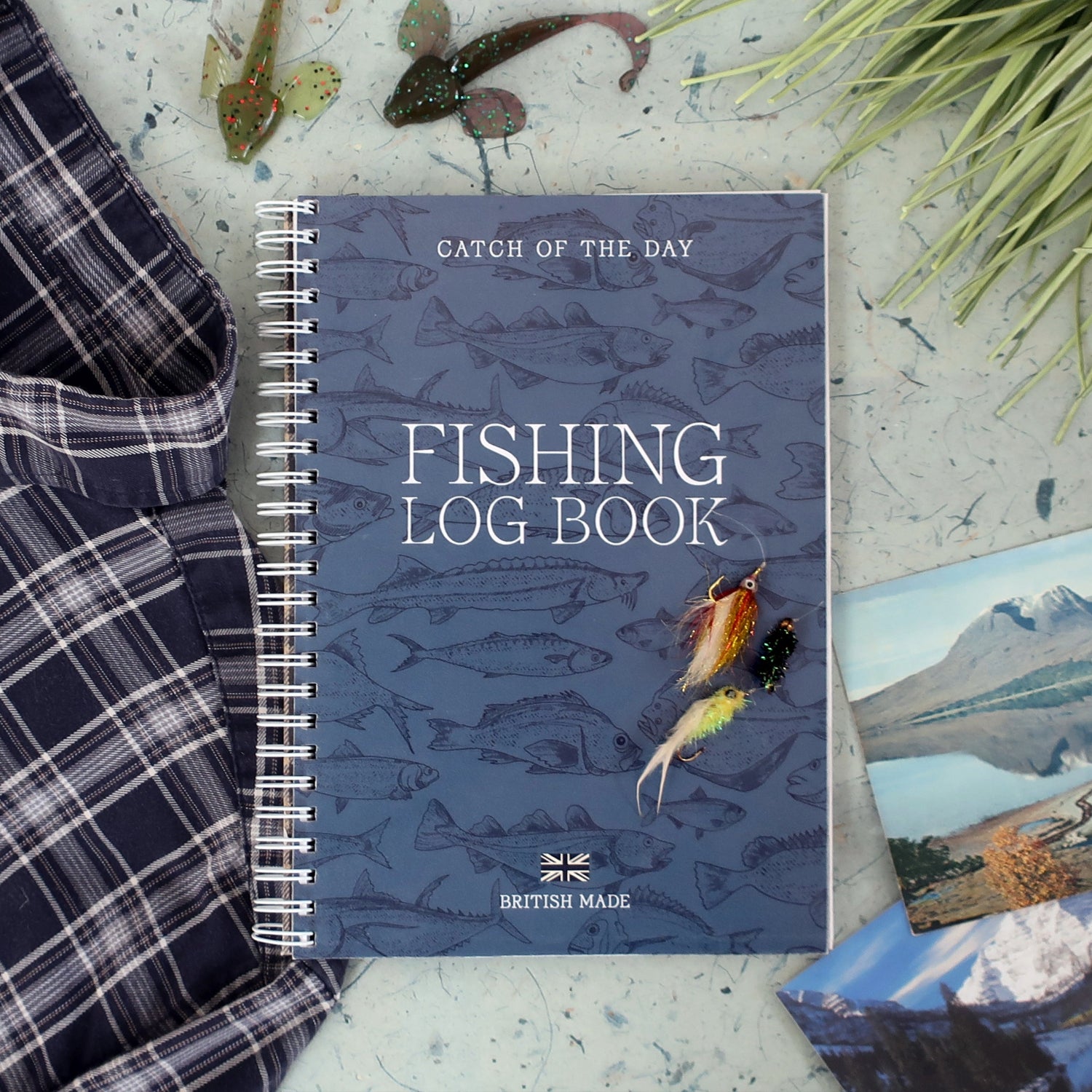
There is nothing more disheartening than spending hours sitting on the riverbank, soaked through by the glorious British weather, and not getting so much as a nibble. Whether you're coarse fishing on a canal or casting off the coast, keeping a detailed fishing log can turn those long, disappointing days around and dramatically increase your catch rate. Why Use A Fishing Log? Once you have got into the routine of packing your fishing journal safely into your tackle bag and noting your fishing trips, you'll soon start to spot patterns in your catches. Over time, you will slowly build up a bigger picture of your favourite fishing haunts. When you have learnt the art of patterning fish through your records, you'll learn when and where the fish are most active With the result being, you'll start catching more fish, more often! What Is A Fishing Log? A fishing log is a place to document anything of note from your fishing trips. Allowing you to identify patterns and trends that have influenced either the success or failure of your days on the water. Our A5-sized Wayzgoose Fishing Log Book includes sections to record everything from the location, bait and lures, and fishing partner(s) to the moon phase. With all these elements recorded, you will never forget a great catch again. How A Fishing Log Helps You Catch More Fish Like everything in life, the more data you acquire, the higher the success rate. As we all know, fishermen only remember the good times, so using our fishing log book, the good times will keep rolling in! With our fishing log, we have made journaling easy for you, with our prompts to remind you to note the water visibility and level, and with our double-spreads' simple layout, recording the fishing trips will be a breeze. You can include as much or as little detail as you desire; however, the more you fill out, the easier it will be to highlight which elements are hindering your catch rate. Even those frustrating 'skunked' days become useful. Looking back, you may find a change in the water level, temperature or time of day made all the difference at those previously successful hot spots. A fishing log helps you recognise when certain fish are at their most active in specific areas. Once you have analysed past trip reports, you can see the patterns and how the time of the day, water conditions have influenced fish behaviour. Your new fishing log book will soon become your most valuable resource for working through hard patches and staying focused, and in turn, improving your fishing results. One thing we do love reviewing is our baits and lures selections, as compared to the other variables like the weather and water temperature, we can control this one! The correlation of which lures were used in the murky water and what type of worm caught your personal best Carp is always exciting to analyse. What To Record In A Fishing Log In our fishing log book, you can note anything and everything you want, from the exact minute you reeled in that Barbel in the 'Catch Log', to that Heron that was stealthily stalking the shallows in the 'Other Observations' section.Here are some of the key variables we record in our fishing logs: Date & Time Location (include coordinates) Body Of Water (river, canal, lake, sea, ocean) Gear & Equipment Bait & Lures Water Visibility Weather Conditions Moon Phase Species Caught Catch Of The Day With every piece of data you record, similarities will shine through in multiple journal entries. Helping you refine your strategies to improve your overall fishing experience. Track Your Progress And Celebrate Success Over the seasons, you will create the ultimate fishing log book, with the complete picture of your fishing journey. It is also a great place of reflection, you can tot up how many hours you spent fishing in total over the spring, or did your average size of Bass go up or down this year?Our Wayzgoose Fishing Log Book includes special sections for: Top 20 Trips Personal Best Catches These pages are perfect for the nostalgic angler to collate their favourite memories, as your top trip may have been more about the company than the record-breaking lands! Final Thoughts We hope your fishing log book will provide valuable insights into your habits and achievements. This tool will help you remember the spots teeming with fish, the best tackle to use, and enable smarter decisions on the water, ultimately boosting your chances of landing more fish. So stop guessing, start logging. Grab your Wayzgoose Fishing Log Book today. Love sharing your fishing memories? Why not follow us on social media? Just search Wayzgoose Shop
Learn more